
How Professionals Know When Water Damage Is Dry
October 23, 2026 · 4 min read
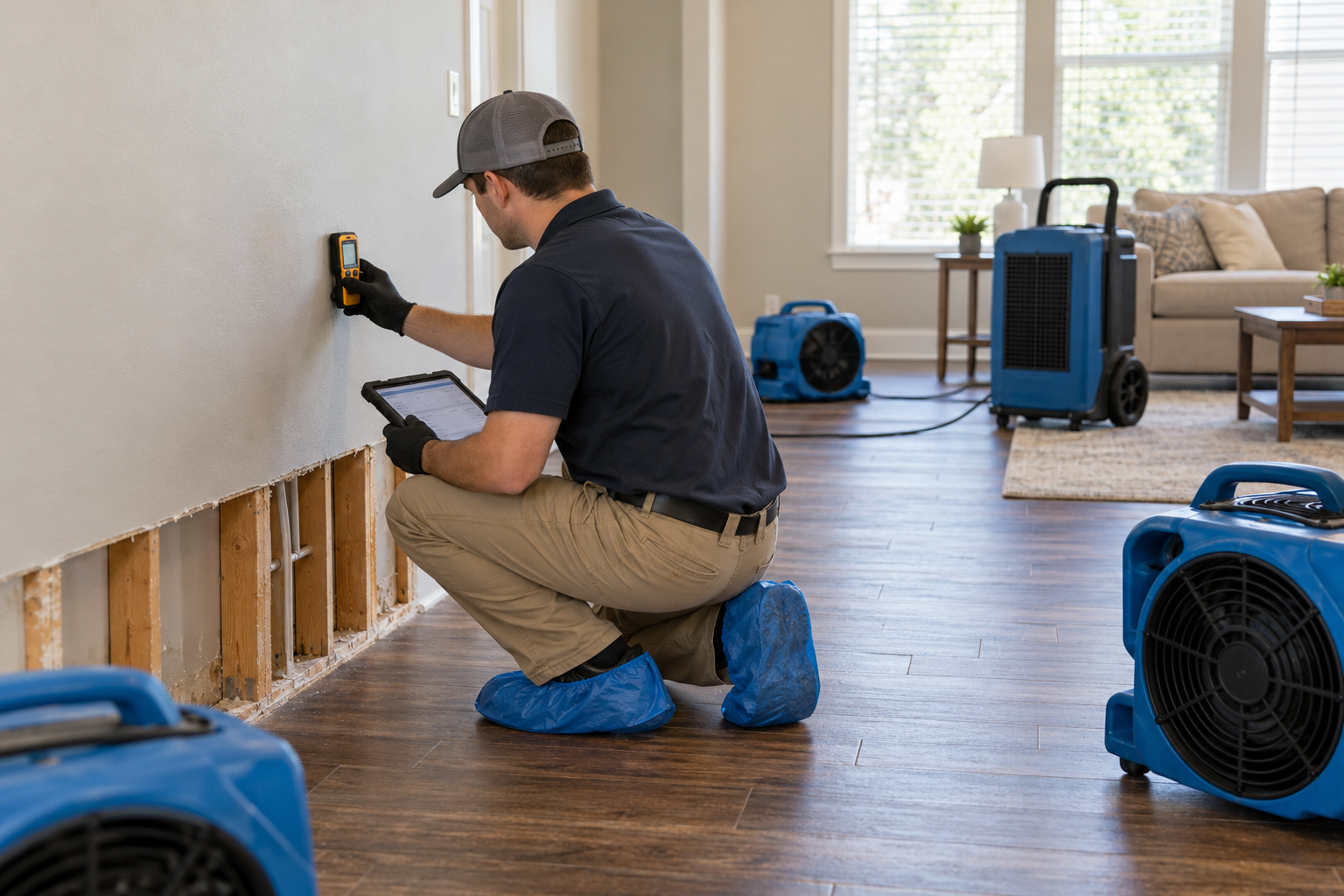
A floor can feel dry while moisture is still trapped underneath it. After a leak or flood, professional water damage restoration in Belton, TX, should continue until affected materials reach an appropriate drying goal. That decision is based on inspection and documented moisture readings, not appearance alone. Daily monitoring helps technicians adjust the drying plan and avoid removing equipment too early.
Extraction Removes Water but Not Every Trace of Moisture
Professional pumps and extraction tools can remove standing water and moisture held in carpet or other accessible surfaces. However, water may already have moved into drywall, insulation, cabinets, subflooring, or framing. These materials can stay damp after the visible water is gone, which is why extraction is normally followed by a planned structural-drying phase. Our guide to what to expect from water damage restoration explains that full process step by step.
Moisture Mapping Defines the Drying Area
Technicians use moisture meters and other inspection tools to compare affected materials with dry areas of the property. Readings taken at several points help show how far the water traveled and which walls, floors, or structural components need attention. This moisture map guides equipment placement and creates a starting record for tracking progress.
Air Movement and Dehumidification Work Together
Air movers increase evaporation from wet surfaces, while commercial dehumidifiers remove moisture from the air. The number and position of these machines depend on room size, the affected materials, and current conditions. Doors may need to remain closed or equipment may be repositioned as drying progresses. Homeowners should not unplug or move restoration equipment unless the technician says it is safe to do so.
Daily Readings Show Whether the Plan Is Working
Drying conditions change over time. Technicians can return to record moisture levels, humidity, and equipment performance. A downward trend shows that the drying system is working; readings that stall may indicate hidden wet material, restricted airflow, or a water source that has not been fully corrected. Monitoring allows the team to make targeted changes instead of simply leaving machines in place for a fixed number of days.
Drying Goals Help Determine When Equipment Can Leave
There is no universal drying timeline for every property. Wood, drywall, concrete, and flooring release moisture at different rates, and weather conditions can affect the process. Equipment should generally remain until readings support that the affected materials have reached the project's established drying goals. Keeping a record of those measurements can also support repair planning and insurance documentation, depending on the claim.
Hidden moisture that dries slowly or incompletely is one reason mold can follow a water loss. Our post on mold after water damage in Central Texas explains what to watch for while drying is still underway.
Water Remediation Help in Belton
Rapid Dry Moisture Recovery provides 24/7 water extraction, structural drying, moisture detection and monitoring, mold-prevention treatment, and insurance-claim support in Belton and surrounding Central Texas communities, including Temple and Killeen. Its technicians document drying progress through the final moisture reading so property owners have a clearer record of the work performed.
Dealing with a leak, flood, or damp materials that will not dry? Call Rapid Dry Moisture Recovery at (254) 541-2698 for 24/7 water-remediation help in Belton and surrounding Central Texas communities. If it is safe, stop the water source and keep valuables away from the affected area while you wait for professional guidance.
Need help right now? We're dispatching 24/7.
Rapid Dry Moisture Recovery serves Belton, Temple, Killeen, and surrounding Central Texas communities.