
Water Heater Leak Water Damage in Belton, TX: What to Do Next
October 30, 2026 · 5 min read
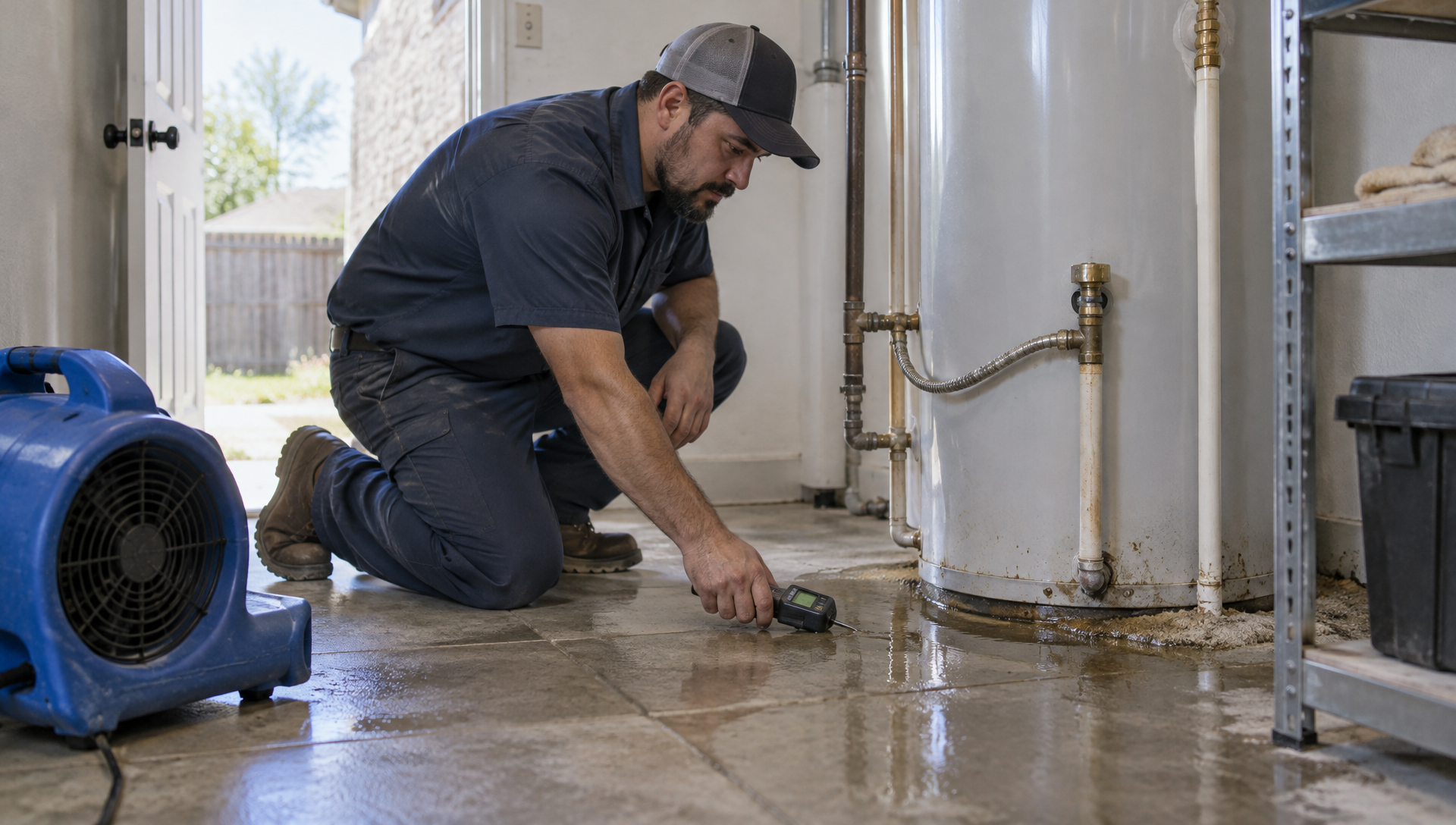
Most people find a water heater leak by accident. You walk into the garage, the laundry room, or a hall closet and your sock lands in a puddle you did not expect. Water heater leak water damage in Belton, TX homes often spreads farther than that puddle suggests, because the tank usually sits in a tight space next to drywall, baseboards, cabinets, or a shared wall. Whether the tank is slowly dripping or letting go all at once, a calm plan for the first few hours makes cleanup simpler. Rapid Dry Moisture Recovery provides water damage restoration in Belton, TX and nearby Central Texas communities, and this guide walks you through what to do next.
First Steps When Your Water Heater Is Leaking
1. Turn Off the Power or Gas
Before you touch anything, think about safety. For an electric water heater, switch off its breaker at the panel, but only if you can reach the panel without standing in water. For a gas unit, turn the gas control knob to the off or pilot position as described on the tank label. If you smell gas, leave the home and call your gas utility from outside.
2. Shut Off the Cold Water Supply
Most tanks have a shutoff valve on the cold water line at the top of the unit. Close it to stop new water from refilling the tank. If that valve is stuck or you cannot find it, shut off the main water valve to the house. Remember that the water inside the tank may still be very hot, so keep hands and feet away from any spray or flow.
3. Move Belongings and Take Photos
Lift boxes, rugs, paint cans, and anything stored on the floor near the heater. Then take photos and video of the tank, the leak point if you can see it, the standing water, and any wet walls or flooring. Pictures taken before cleanup can help your insurance carrier and your restoration team understand what happened.
Where Water Heater Leak Water Damage Hides in Belton Homes
Water heaters in Belton homes are often tucked into garages, interior closets, attics, or laundry rooms. Each spot sends water somewhere different. A closet heater can soak the bottom of the surrounding drywall and wick into the hallway carpet or the next room. An attic unit can drip into ceiling drywall and insulation before you ever see a stain. Garage heaters may seem harmless, but water can still run under the wall plate into finished rooms.
The tricky part is that the floor might look fine an hour later. Drywall, baseboards, cabinet bases, and subflooring can hold moisture well after the surface dries. That is why professionals rely on moisture meters and thermal imaging instead of a quick look. Our article on how professionals know when water damage is dry explains how those readings guide the drying plan.
Slow Drip or Sudden Failure: Why It Matters
A slow leak from a fitting, valve, or drain can go on for weeks behind a closet door. That kind of long-term moisture is more likely to affect framing and may create conditions where mold can develop. If you notice a musty smell or discoloration near the heater, read our guide to mold concerns after water damage in Central Texas before you start pulling anything apart.
A sudden tank failure is different. It can release a lot of water in a short time, a bit like a burst pipe in your Belton home. The water spreads quickly across flooring and under walls, so fast extraction becomes the priority.
What Professional Water Heater Leak Cleanup Includes
Every job depends on the home, but a typical water heater leak cleanup follows a clear path:
- An inspection to see where the water went and which materials were affected
- Extraction of standing water from floors, carpet, and pad
- Moisture mapping with meters and thermal imaging to find wet areas inside walls
- Structural drying with commercial air movers and dehumidifiers
- Mold-prevention treatment where it fits the drying plan
- Daily monitoring and documentation until drying goals are met
If you want the full picture from first visit to final reading, see our overview of what to expect from water damage restoration in Central Texas. Keep in mind that repairing or replacing the water heater itself is a job for a plumber. Our role is getting the water out and the structure dry so the next steps can happen on solid ground.
Is It Clean Water or Something Else?
Water from the tank itself usually starts out as clean water. Things change if it sat for a long time, mixed with debris on a garage floor, or if a nearby floor drain backed up at the same time. If you see a backup coming from a drain, toilet, or sewer line, treat it as contaminated and keep people and pets out of the area. Our sewage and contaminated-water cleanup service handles that kind of loss, and our post on the sewage cleanup process in Belton explains how it differs from a clean water job. If belongings were affected, you may also find our guide on what can be saved after a sewage backup helpful.
A Note on Insurance
Coverage for water heater leaks varies by policy. Some policies treat a sudden failure differently from a slow leak that went on for a long time, and many do not cover the heater itself. Mold and sewage-related damage often have their own limits or exclusions. Call your carrier, ask what they need, and keep your photos, receipts, and drying records together. Rapid Dry can document the work and support your claim, but your policy terms and your adjuster decide what is covered.
Frequently Asked Questions
Can I keep using my water heater if it is only dripping a little?
It is safer to shut it down and have a plumber look at it. A small drip can come from a loose fitting or a valve, but it can also be an early sign the tank is failing. Either way, the water around it should be dried properly so it does not sit in walls or floors.
Will a shop vac and a fan dry it out?
They can help with a small surface puddle, but they cannot tell you whether drywall, baseboards, or subflooring are still wet. Moisture readings are a much more dependable way to know when the structure is actually dry.
Do you serve areas outside Belton?
Yes. Rapid Dry Moisture Recovery helps homeowners in Belton, Temple, Killeen, Salado, and surrounding Central Texas communities. You can browse more tips on the Rapid Dry blog.
Get Help With a Leaking Water Heater in Belton
If your water heater has leaked onto floors or into walls, do not wait to see whether it dries on its own. Rapid Dry Moisture Recovery is available 24/7 for water extraction, structural drying, and moisture monitoring across Belton and Central Texas. Call (254) 541-2698 or request emergency service online, and we will help you take the next step.
Need help right now? We're dispatching 24/7.
Rapid Dry Moisture Recovery serves Belton, Temple, Killeen, and surrounding Central Texas communities.